Tule Lake was the largest and most infamous of the camps. At its peak it housed nearly 19,000 prisoners and was the site of significant unrest. While the camp started out with the same status as other camps, it was eventually designated a "segregation center" where prisoners deemed disloyal by the so-called "Loyalty Questionnaire" were separated from their families and moved from other camps. (The official title of the document was "Selective Service Form 304A / Statement of United States Citizen of Japanese Ancestry".)
Note: Dinner will be served. Film screening followed by panel discussion with students whose families were incarcerated in Japanese American incarceration camps.
Resistance at Tule Lake
2017 | 80 mins | Documentary | Japanese-American
Directed by Konrad Aderer
Resistance at Tule Lake tells
the long-suppressed story of 12,000 Japanese Americans who dared to
resist the U.S. government’s program of mass incarceration during World
War II. Branded as “disloyals” and re-imprisoned at Tule Lake
Segregation Center, they continued to protest in the face of militarized
violence, and thousands renounced their U.S. citizenship. Giving voice
to experiences that have been marginalized for over 70 years, this
documentary challenges the nationalist, one-sided ideal of wartime
“loyalty.”
Resistance at Tule Lake premiered
early 2017 and continues to screen in various film festivals, museum
exhibitions, educational institutions and local community
organizations. The
documentary will be broadcast nationally in 2018 and made available for
educational, institutional and home use as a DVD and other formats
including Internet viewing.
Parking
Parking around MIT is very challenging so if you can take the T you should. There are some two hour metered parking spaces on Vassar St. and nearby streets. The nearest parking garages are in Kendall Square.
[The Shining Star of Losers Everywhere] (ESPN)
Directed by Mickey Duzyj. 2016. USA. 19min.
In
2003, Japan was plunged into economic darkness, and people needed a ray
of hope. They found one in Haru Urara, a racehorse with a pink Hello
Kitty mask and a career-long losing streak.
[Wasabi]
Directed by Bunji Sotoyama. 2016. Japan. 29min.
Aoi
is a high school student living with her father, Kazuo, who suffers
from depression. Kazuo is unable to run his sushi restaurant due to his
illness, leaving Aoi no choice but to succeed her father to save the
restaurant. She turns to a magical baseball pitch to find her fate.
[Complex x Complex]
Directed by Miyuki Fukuda 2015 Japan. 24min.
Eighth
grader Yui longs to be a grown-up. She considers armpit hair the symbol
of adulthood, so her classmate Takeo—who has the thickest underarm hair
in the class—becomes her idol. Is it love? A coming-of-age story about
puberty, love, and halting conversation.
[I & Myself]
Directed by Hisanori Tsukuda. 2017. Japan. 5min.
Mizuho
came to Tokyo to make her dream a reality, but things have not been
going well for her. She finds herself thinking, "What did I come to
Tokyo for ... ?" Depressed and on her way home one day, she is stopped
by a lady, who, to her astonishment, is another version of herself.
[Sociopaths]
Directed by A.T.. 2015. Japan. 6min.
A girl encounters an android on the street. Unnerved by the experience,
she decides to follow the android to give it a "message.”
[Post X years later]
Directed by Hideaki Ito. 2015. Japan. 86 min.
In the aftermath of WW2 the Bikini Atoll was used by the United States as a testing ground for Nuclear and Thermonuclear technology until 1957. In 1954 the largest test - the detonation of a Hydrogen bomb in Operation Castle Bravo - resulted in a significant amount of fallout that impacted inhabited areas. Among the exposed in the incident was the Japanese fishing boat Daigo Fukuryu Maru with a crew of 23, who at the time was outside of the "danger zone" declared by the US Government. While history has documented the plight of the Daigo Fukuryu Maru, the reality is many other boats also outside the "danger zone" were similarly exposed. Now 59 years later, a documentary crew in Japan revisits the incident and interviews surviving fishermen, including some from other Japanese boats in the area, to bring to light an ordeal whose full impact has been kept in the dark by both the US and Japan governments.
The 9th annual Boston Asian American Film Festival runs from October 19th to the 22rd. Three Four films in this year's festival have Japanese American themes. I'm very excited that Japanese American filmmaker Konrad Aderer is returning to Boston for the New England premiere of Resistance at Tule Lake, this year's Centerpiece Film. The last time he was in Boston was five years ago when his first documentary, Enemy Alien, was co-presented by BAAFF at the 2012 Boston Palestine Film Festival. Check out the other films here.
It Is What It Is 2016 | 8 mins | Documentary| Japanese-Iranian
Directed by Cyrus Yoshi Tabar
It
is What it Is Filmmaker Cyrus Yoshi Tabar, a first-generation
Iranian-Japanese-American, has a photo of his grandparents holding him
as an infant. The photo captures his first and last encounter with
them. Seeking to understand the fracture in his family, Cyrus embarks
on a journey into the dark and nebulous corners of family history.
Fragmented and cloudy images of his family speckle his investigation
as he talks to his aunt and sister, but discovers that a family’s
narrative isn’t linear and that truth’s elusive.
Dorothy Takahashi, a Japanese American dancer born in 1917, performed under the stage name Dorothy Toy with her partner Paul Wing. During WWII, her family was incarcerated at Topaz. Dorothy escaped incarceration by going to New York with Paul. She was believed by many to be Chinese but gossip columnists outed her as Japanese, costing her film roles. Dancing Through Life tells her story.
NBC News: Dorothy Toy, the ‘Chinese Ginger Rogers,’ Found Stardom Amid World War II
99
year old Dorothy Toy Fong is a living dance legend. She began as a
child after a vaudeville theater manager noticed her dancing in front of
her parent's restaurant. During the 1930's, 40's and 50's, she teamed
up with Paul Wing and would eventually become the most famous Asian
American dance duo in this country's history. Known for dancing on her
toes, she developed a unique, athletic style of performing. Toy and Wing
were pioneers, performing on Broadway and in Hollywood films. They were
also the first Asian Americans to dance at the London Palladium.
Koji
Oshima is the proud owner of a small corner grocery store, but he must
now abandon everything and report to an assembly center. His belongings,
his business – everything must be sold or left behind, except what he
can carry in one large duffel bag.
Up against a wall, Koji
receives only one low-ball offer for his store, which he has no choice
but to accept. The lone bright spot during this turmoil is the
friendship Koji develops with a precocious nine-year-old girl. On the
day of his departure, however, Koji is saddened to learn that even this
friendship has been tainted by the larger forces of fear and wartime
hysteria.
This is director Konrad Aderer's second feature length documentary about the Japanese American incarceration. Although Konrad's family was incarcerated at other camps, he told me that he chose Tule Lake as the subject of his film because he said he's always been interested in the Japanese and Japanese Americans who resisted.
2017 | 80 mins | Documentary | Japanese-American
Directed by Konrad Aderer
RESISTANCE
AT TULE LAKE tells the long-suppressed story of 12,000 Japanese
Americans who dared to resist the U.S. government's program of mass
incarceration during World War II. Branded as 'disloyals' and
re-imprisoned at Tule Lake Segregation Center, they continued to protest
in the face of militarized violence, and thousands renounced their U.S.
citizenship. Giving voice to experiences that have been marginalized
for over 70 years, this documentary challenges the nationalist,
one-sided ideal of wartime 'loyalty'.
See trailers for 14 films in this year's festival:
Edit History
10/17/17 10:59pm: Added It Is What It Is. Not sure How I missed it!
The 8th annual Boston Asian American Film Festival runs from October 20th to 23rd. This year's festival has films from a Japanese American filmmaker, a
Japanese-Brazilian filmmaker, a Japanese animator, and a film about a
local Japanese American mental health activist. Check out the other films here.
I'm really excited that Emerson College alum Matthew Hashiguchi's film Good Luck Soup will be screened for free at BAAFF! The film is being co-presented with Emerson's Bright Lights Series. Good Luck Soup is a transmedia documentary. Check out the film's interactive site. This is Matthew's second film at BAAFF. People Aren't All Bad with Yutaka Kobayashi was in the 2012 Shorts Program.
Directed by Matthew Hashiguchi 2016 | 70 mins | USA | Documentary
After
years of rejecting his Japanese heritage, filmmaker Matthew Hashiguchi
sets out on a humorous yet insightful journey to discover if his joyful
grandmother and other family members also struggled with their Japanese
American identities, just as he did while growing up in a predominantly
white neighborhood in the Midwest. Along the way, Matthew uncovers the
family’s decades-long struggle to assimilate into the Midwest and
obtains insightful, yet humorous wisdom from his grandmother on how she
overcame racial adversity after leaving the WWII Japanese American
Internment Camps.
Leandro Tadashi, a Japanese-Brazilian filmmaker, filmed Bá in Brazil. The full film can be seen on Vimeo (click the blue "CC" for subtitles in English, Japanese, Spanish, French and Portuguese!). I emailed with Leandro and learned that his grandmother, Yuriko Miamoto Shimata, plays Bruno's Bá. She also starred in his 2011 short Oyasuminasai. Unfortunately, Leandro won't be able to make it for the Q&A.
Bá
Written & directed by Leandro Tadashi 2015 | 14 mins | Brazil | Drama
Tells the story of a little Japanese-Brazilian boy named Bruno,
whose life is turned upside down when his "Bá" (from Bāchan, grandma in
Japanese) is brought to live in his house.
Pata
Directed by Kathryn Klingle
2016 | USA | 9 mins | Documentary
"Pata" explores what role chronic depression has played in the life of Pata Suyemoto--teacher, artist, mental health activist.
Asian CineVision has an interesting interview with Masayuki Kusaka, the producer of Harry on the Clouds. The film was originally produced as a music video for the Japanese band, RAM WIRE, with the title 僕らの手には何もないけど (Bokura no te ni wa nani mo naikedo) "Although there is nothing in our hands". They changed the soundtrack and sent it off to film festivals around the world. [Special thanks to Sachiko T for translation help!]
Harry on the Clouds
Directed by Aya Shiroi (城井文)
2016 | Japan | 4 mins | Drama (Animated)
Mother sheep can't wake up because Harry was gone. But Harry is looking his mother from the clouds.
See trailers for 16 films in this year's festival:
Directed by Shirley Kazuyo Muramoto-Wong
2014 | 56 mins | Documentary
“Hidden Legacy: Japanese Traditional Performing Arts in the World War
II Internment Camps” is the full title of this documentary, using
historical footage and interviews from artists who were interned to tell
the story of how traditional Japanese cultural arts were maintained at a
time when the War Relocation Authority (WRA) emphasized the importance
of assimilation and Americanization. Various essays and studies
concerning the camps have been published, but have focused on the
political and legal aspects of the internment, while hardly mentioning
cultural and recreational activities in the camps. When cultural and
recreational activities have been documented, they have focused on
American culture, such as baseball and swing music. This film will be
the first major presentation of the existence of traditional music,
dance and drama in the camps. It is possible only because Shirley
Kazuyo Muramoto-Wong has been searching, researching and collecting for
over 20 years information on who these artists were. She has collected
interviews, oral and visual histories, as well as artifacts from the
internees and relatives of internees, including teachers, students, the
performers, and the incredible artists who made instruments, costumes,
and the props needed for a full performance from scraps of wood,
toothbrush handles, gunny sacks, paint, and whatever they could scrape
up. Her own family’s history with the camps led her to become a kotoist
and teacher of the Japanese koto (13-stringed zither).
Very little is known of the existence of traditional Japanese
performance arts in the camps. The artists Muramoto-Wong has
interviewed are all Americans, all born here, but practiced Japanese
arts before the war, during, and after the war, because they loved the
art. This made them “social activists” in their own quiet way,
continuing the music and dance they loved, helping others to learn and
enjoy these arts, and to help draw their attention away from their
surroundings, giving them pride and self-esteem. Their efforts kept
Japanese cultural arts alive in our communities today.
We have interviewed 30 artists in the fields of music (koto, nagauta
shamisen, shakuhachi, shigin, biwa), dance (buyo, obon) and drama
(kabuki) who were interned at Tule Lake, Manzanar, Amache/Granada,
Rohwer, Gila River, and Topaz. We have interviewed Prof. Minako Waseda
of Geijutsu Daigaku University of Music and Arts, and Kunitachi College
of Music, both universities in Tokyo, whose research thesis,
Extraordinary Circumstances, Exceptional Practices: Music in Japanese
American Concentration Camps, had written the only scholarly work that
had been published on this subject. We are also interviewing students
of these arts in America, some who learned from these artists, and some
who are carrying on the tradition in our communities today, and some who
have taken this knowledge, and expanded creatively and artistically in
various imaginative ways.
Film locations include camps at Manzanar, Tule Lake, Heart Mountain;
locations in Japan, such as Osaka, Kyoto, 3 Tokyo music universities
(Tokyo Ongaku Daigaku, Geijutsu Daigaku, Kunitachi College of Music);
Cherry Blossom Festivals in San Francisco and Cupertino; San Jose Obon
Festival; Chidori Band 59th Anniversary Concert; Japanese American
Museum of San Jose; dance studio of Bando Misayasu (aka Mary Arii Mah),
and koto studio of Shirley Kazuyo Muramoto-Wong.
Event Information
Film screening followed by Q&A with creative director Shirley Kazuyo Muramoto-Wong and
actress Takayo Fischer with koto performance by Shirley Kazuyo Muramoto-Wong.
Date & Time
Monday, October 24, 2016
3:00 - 6:00pm
Location
UMass Boston
McCormack Hall, Ryan Lounge, Room M-3-721 (3rd floor)
Dorchester, MA 02125
Morrissey Satellite Lot (75 Morrissey Boulevard) Herb Chambers
property next to the Boston Globe building
St. Christopher’s Church across from the Bayside Lot
Admission
Free
Date & Time
Wednesday, October 26, 2016
7:00 - 9:00pm
Location
Wellesley College
Acorns House (building not on map - head toward the lake, pass Clapp Library and Acorns House is to the right of Harambee House)
106 Central Street
Wellesley, MA 02481
Date & Time
Thursday, October 27, 2016
6:30 - 8:30pm
Location
Brandeis University
Mandel Center for the Humanities, Room G12
415 South Street
Waltham, MA 02453
Directions/Parking
After 5pm visitors may park anywhere. Tower Lot is closest to the Mandel Center.
Admission
Free
Special thanks to Kimi Maeda for making the introductions that allowed us to get Hidden Legacy screened at Brandeis!
About the Creative Director
Shirley Kazuyo
Muramoto-Wong was raised in a musical family whose roots lie in the Chikushi
Kai School of kotoists in Japan. Her mother is a respected head of
the Chikushi Kai in the Bay Area, with close ties to her teachers in
Japan. Shirley was taught within that tradition, learning and constantly
performing the core of traditional pieces shared by all koto groups and
also the repertoire particular to the Chikushi Kai. Importantly, it is
a group which is also open to contemporary music for the koto, so that
her repertoire encompasses such works as the compositions of Tadao
Sawai, Katsutoshi Nagasawa and Shinichi Yuize. From that spirit of
open-mindedness (within tradition), Shirley also pursued her interest in
jazz and as it extends to the koto, and improvisation.
In
1976, Shirley received her “Shihan” degree (instructor’s license) with
“Yushusho” (highest) honors from the Chikushi School in Fukuoka, Japan,
and her "Dai Shihan" Master’s degree from the same school in 2000 for
her mastery of the koto.
A
dedicated musician for over 50 years, Shirley strives to involve
diverse genres of art and music in her performances. She teaches
private students, and has offered classes in koto music at public
schools and at universities, most notably classes at UC
Berkeley. Shirley has incorporated storytelling, poetry, hip-hop,
gospel, bluegrass, jazz, European classical, and has arranged world
songs from countries such as China, Ethiopia, Guatemala, Philippines and
so on, for koto, as well as performing and arranging traditional and
contemporary Japanese songs, and composing her own koto pieces. She
also is the leader of the world jazz fusion group, the Murasaki
Ensemble.
“The
koto is an extremely versatile instrument,” says Shirley. “Though it
seems limited and simple in its nature, it’s possible to extract a
myriad of textures and sounds through various techniques and even
percussive rhythms by incorporating the body of the instrument itself.
The koto is initially easy to play, but it really takes years of
practice to be able to produce a good sound.”
Shirley’s
koto influences include koto masters Katsuko Chikushi, Kimio Eto, Kazue
Sawai, and June Kuramoto. Her jazz influences come from the members of
the her jazz group, the Murasaki Ensemble, who are Vince Delgado on
percussion, Jeff Massanari on guitar, Matt Eakle on flute, and Alex Baum
on bass.
Because of Shirley’s versatility on the koto, she has performed for many notable people and celebrities, such as: Senator
Diane Feinstein, George Lucas/Lucas Films, former Prime Minister
Yasuhiro Nakasone, Walter Shorenstein, Larry Ellison and Mikael
Gorbachev. She has also performed at many eclectic events from the
Fillmore and Union Street Jazz Festivals to the AT&T Golf Tournament
hosted by Clint Eastwood, Christina Aguilera, and the Sacramento,
Marin, and Fremont symphony orchestras. Shirley has performed at
numerous community events, and given of her time to many of them,
including annual Cherry Blossom Festivals in San Francisco and
Cupertino, many Obon festivals in Oakland, Palo Alto, Mountain View and
San Jose, just to name a few. In 2012, Shirley was honored by the Hokka
Nichibei Kai Bunka Japanese American Cultural Association of America by
being inducted into their Hall of Fame.
Shirley has
been most interested in researching Japanese traditional performance
arts in the World War II concentration camps, after finding out that her
mother learned to play the koto from koto teachers at Topaz and Tule
Lake camps during WWII. In 2012, she was awarded a National Parks
Service, Japanese American Confinement Sites grant to turn her
decades-long research into a documentary film. The film, “Japanese
Traditional Performance Arts in the World War II Internment Camps”
completed in 2014, includes interviews and stories from 21 people who
experienced Japanese performing arts in the camps, or were taught by
teachers from the camps, archival photos as well as actual film footage
of performances in the camps. Hidden Legacy has
been screened publicly at numerous community showings, at universities
including UC Berkeley, UCLA, Stanford, Tokyo Arts, Waseda, Musashino and
Doshisha Universities, and aired on public TV across the United States
since its premiere.
Takayo Fischer
Actress
Takayo Fischer learned kabuki, buyō, and shamisen while she
was interned at the Rohwer War Relocation Center in Arkansas during
WWII. She is best known for her roles as Mistress Chang in Pirates of the Caribbean: At World's End and as Suzanne, the secretary to Brad Pitt's character, Billy, in the film Moneyball.
Takayo is active with the renowned Asian American theater organization
East West Players in Los Angeles and has acted on Broadway.
In 2015, as America and Japan celebrated the 70th anniversary of the end of World War II, few remembered – if they ever knew – that twelve American prisoners-of-war were on the ground in Hiroshima on August 6, 1945 and were killed by the atomic bomb that destroyed the city that day.
One of the Americans was Normand Brissette, a teen-age Navy flier from Lowell, Massachusetts; another was Sgt. Ralph Neal from Harrodsburg, Kentucky.
This powerful new film tells their story.
And the story of Shigeaki Mori, himself a Hiroshima survivor, who never knew the American bomb victims but who has devoted his life to finding their families and dedicating monuments to their memory.
Tufts alumna Misako Ono's documentary The Genki Spark is available online here! It's an incredibly moving look at what The Genki Spark does and why a group like theirs is so important. Launched in 2010 at the Boston Asian American Film Festival, they are the only multigenerational, pan-Asian, women's taiko troupe in the United States. While based in Boston, they have traveled around the US and to the UK to perform and host workshops. Locally they're known for hosting two annual events – their Making Women's History event (video from 2013 & 2014) and the Brookline Cherry Blossom Festival which they host with Brookline High School.
The Genki Spark just celebrated their 5th anniversary which is remarkable for a niche arts organization. Running a nonprofit is always challenging and even more so for arts and minority nonprofits. They're currently fundraising so they can continue their amazing work for another year. and are trying to reach $10,000 by Wednesday, December 16th. Any amount is appreciated! Details for how to donate are available on their website. If you don't have any spare cash you can still help by spreading the word on social media. Please help them reach their goal!
The 7th annual Boston Asian American Film Festival starts this Thursday, October 22nd. It looks like there are only two films at this year's festival featuring Japanese American stories. Check out the other films here!
Despite lingering wartime enmity, tens of thousands of Japanese
wives -- the biggest influx of Asian women in U.S. history -- crossed
the Pacific. They began new lives in difficult and to them mysterious
circumstances, scattered across the country in places where they were
often the first Japanese ever seen. What was it like to abandon family,
friends and country, and marry a former enemy? Even for those whose
choice of spouse proved to be a tragic mistake, there was no turning
back. Many in Japan viewed them as social outcasts and even today the
words "war bride" in Japanese carry such a stigma -- of bar girls, even
prostitution -- that people don't like to say them. Now these women are
in their 80s. This is their story, of lives shaped by one irrevocable
decision.
Directed by Grace Lee
2015 | 56 mins | Documentary
Off the Menu: Asian America is an exploration of food in
changing communities, families, traditions, and faiths. In the one-hour
documentary, Lee travels from Houston, Texas to New York’s Lower East
Side, from Oak Creek, Wisconsin to Oahu, Hawaii seeking stories that
reflect an evolving Asian Pacific America and the role food plays in
peoples’ lives.
“We wanted to find unexpected stories that
embodied the Asian American experience,” Lee said. “Asian America is
already such a vast, complex, and contested idea. Focusing on food was a
way to explore the deeper connections of culture, family, and ideas of
authenticity and adaptation that link us all.”
I would like to note that the United States has never apologized to Japan for dropping the bombs and killing somewhere between 129,000 - 246,000+ civilians (mostly Japanese, but including others) and maiming hundreds of thousands more including Japanese Americans, Koreans, and other foreign nationals. For scale, compare that to the nearly 16,000 who died in the 3.11 tsunami, earthquake, and nuclear disaster. Many Americans persist in the belief that the bombing was "an act of mercy" that ended the war rather than the result of rabid racism that fueled things like the imprisonment of 120,000 Japanese Americans and Japanese for committing the "crime" of being Japanese or of Japanese descent. Look up pictures of hibakusha (people who survived the bombings- the literal translation is "explosion-affected people") and tell me the bombings were merciful.
Although opinion on the use of atomic bombs has shifted in the US, there is very little support
for an apology. A US president has never attended ceremonies to mark
the anniversaries; the highest ranking official we have ever sent have
been US ambassadors to Japan and that only started five years ago (see The New York Times article below for more details).
I was very surprised to read that the Battleship Missouri Memorial at Pearl Harbor, Hawaii is currently displaying an exhibit of artifacts from the Chiran Peace Museum for Kamikaze Pilots (Wikipedia) which has never been displayed outside of Japan before. Elsewhere in the US WGN America has been making a fictionalized TV show called Manhattan
about life in Los Alamos and the building of the bombs. They style the show's title as "MANH(A)TTAN" with the "(A)" on top of an unexploded bomb stuck into Los Alamos. The show premiered last year just a few days before the 69th anniversary of the bombing of Hiroshima. I thought about writing about it, but I was so disgusted after watching the trailer and
reading reviews that praised the show that I couldn't
bring myself to watch the first season. There's nothing entertaining about how the US maimed and killed up to half a million people and Americans still think it's funny to joke about it. Incredibly the show got renewed for a second season.
It has always amazed me that Japan and most of its citizens don't hate the US. It is widely believed that this is due to the US's heavy involvement in rebuilding post-war Japan during the US-led Allied occupation that lasted until 1952. Earlier this year the Pew Research Center published the results of a survey titled, Americans, Japanese: Mutual Respect 70 Years After the End of WWII. While US-Japan relations are generally seen as good, Japanese see Americans as inventive and tolerant but not honest or hardworking. Interestingly, 75% say they trust the US even though 79% don't think that the bombings of Hiroshima and Nagasaki were justified.
For some stories from Hiroshima, please see Koji Kanemoto's blog, Masako and Spam Musubi and A-Bomb and Us, a website containing translated stories from surviviors.
You would think from the title of this post that I'm sharing a new George Takei viral video, but he's actually appearing in an interesting documentary titled Do I Sound Gay?. I know this is a bit off-topic but I'm always excited in anything George Takei does. Fellow Asian American queer, Margaret Cho, also appears in the film.
At the moment it looks like the only place the film will be screened in the Boston area is at the Kendall Square Cinema in Cambridge beginning next Friday, July 24, 2015. Writer/Director David Thorpe will be there on July 24th and 25th, details TBA.
Is there such a thing as a “gay voice”? Why do some people “sound gay” but not others? Why are gay voices a mainstay of pop culture—but also a trigger for anti-gay harassment? After a break-up with his boyfriend, journalist David Thorpe embarks on a hilarious and touching journey of self-discovery, confronting his anxiety about “sounding gay.” Enlisting acting coaches, linguists, friends, family, total strangers and celebrities (including David Sedaris, George Takei, Dan Savage, Margaret Cho, Don Lemon and Tim Gunn), he quickly learns that many people—both gay and straight—often wish for a different voice. In Thorpe's feature-length documentary debut, what starts as a personal journey becomes a chance to unpack layers of cultural baggage concerning sexuality, identity and self-esteem.
If you're aware of a 3.11 event that I haven't listed, please post
a comment with a link to the event or details if the info isn't on a
public webpage. This page will be updated if I find out about more events.
March 11, 2015 will be the fourth anniversary of the historic triple disaster that Japan experienced in Tōhoku on March 11, 2011. Although the world's attention has moved on to other disasters, some
groups in Boston continue to be involved in supporting Japan through
this crisis and educating the public. If you're interested in learning
more, please consider attending one of these events. Events are listed in chronological order.
This remarkable documentary offers a glimpse into the life of Taylor
Anderson (JET Program, Miyagi prefecture, 2008-11), a young American
woman who dedicated herself to teaching Japanese children, through
in-depth personal accounts from her loved ones. Laced with emotional
recollections, moving photographs and home movies which are as many bits
of the wonderful puzzle that was her incredible existence, the film
walks the viewer through Taylor's 24 years on earth and untimely end
caused by the Great East Japan Earthquake and Tsunami of 2011. In light
of the tragedy, the film sends a message of hope for all to follow their
hearts. [90 minutes. USA, 2012. BD.]
Regge Life has been making
groundbreaking films for over two decades including the acclaimed
Doubles: Japan and America’s Intercultural Children , and most recently
Reason to Hope, which chronicles the events surrounding the 2010 Haiti
earthquake.
Date & Time
Wednesday, February 25, 2015
6:00pm - 8:00 pm
Location
Harvard University
CGIS South Bldg., 1730 Cambridge St., Tsai Auditorium S010, Cambridge, MA 02138
MIT Japanese Tea Ceremony will hold their annual remembrance and fundraising event at the Sanzashi-An Tea House
on Showa Boston's campus. Each session is about 45 minutes, includes
Japanese Tea Ceremony performance with Japanese confectionery and green
tea. Children are welcome to join and babysitter available upon request.
Date & Time
Sunday, March 8, 2015
10am/11am/12pm/1pm/2pm
RSVP by Thursday, March 5, 2015
This
year is the third annual Cranes on the Square event organized by local
teacher Tim Nagaoka with support from the Boston Parks & Recreation
Department, the Japanese Consulate, and the Japan Society of Boston. Volunteers will teach people how to fold origami cranes which
will form a temporary public art piece in Copley Square then be
collected and delivered to people in the disaster area.
Survival rates and recovery rates from the Great East Japan Earthquake and resulting tsunami have varied tremendously across the coastal towns in Japan's Tohoku area. A few villages and towns have rebuilt all of their schools, repopulated homes, and reestablished businesses and infrastructure, while others struggle to do so.
Using quantitative data, Professor Daniel Aldrich of Purdue University will illuminate the factors responsible for these outcomes in a lecture, followed by a reception with light snacks.
Date & Time
Monday, March 9, 2015
8:30pm
Location
Tufts University, Olin Center, 180 Packard Ave., Room 012, Medford, MA 02155
Harvard has been doing a great job of hosting
talks year-round about the problems Japan is still facing after 3.11.
Talks are open to the public, though inconveniently scheduled for people
with 9-5 jobs. Some of the talks are posted on the Program on
U.S.-Japan Relations Vimeo page.
Meditation for Fukushima
Tewassa, a Cambridge-based volunteer group that produces "message quilts" for schools and organizations in the Tōhoku region, will be holding a memorial event.
"Updates from Tohoku, a journey to new life," is a commemoration of the fourth anniversary of 3.11, the disaster that occurred on March 11, 2011 in the northeastern region of Japan and affected nearly 500,000 people, including 20,000 deaths and missing.
Hosted by the Consulate-General of Japan in Boston, Berklee College of Music, Fish Family Foundation, Japan Society of Boston, and the U.S.-Japan Council/TOMODACHI Initiative, the event will be held from 6pm to 8pm on Tuesday, March 31, 2015 at Berklee College of Music.
With the purpose to not let Tohoku be forgotten, the event will celebrate the friendship between Boston and Tohoku, and showcase individuals and projects working on the disaster ground, including Shun Kanda of the MIT Japan 3/11 Initiative, Anne Nishimura Morse of the Museum of Fine Arts, Boston, and Megumi Ishimoto of Women's Eyes. Two Berklee students, recipients of the TOMODACHI - Suntory scholarship program, will also perform short pieces as tributes to Tohoku.
The 6th annual Boston Asian American Film Festival is running right now and they have their most high profile Japanese American guest coming next week - George Takei! I didn't get to see it in the spring at the Boston LGBT Film Festival so I'm really excited that the BAAFF decided to include To Be Takei in this year's festival. The BAAFF has kindly offered a discount code for Japanese-American in Boston readers (see below).
Monday, November 3, 2014, 7:00PM Somerville Theatre @ 55 Davis Square, Somerville, MA 02144 Tickets: $25 (+ $1.50 transaction charge) in advance, $30 at the door (though they are likely to sell out)
Use discount code BAAFFROCKS for $5 off! (enter on second screen before you check out)
George Takei was always searching for the perfect role - only to find it within himself.
Jennifer
Kroot's TO BE TAKEI follows Takei and his husband Brad, capturing their
day-to-day as they prepare for Takei’s dream project, ALLEGIANCE, a
musical based on his harrowing childhood experiences inside a Japanese
American internment camp during World War II. Intertwined with this
narrative is a look into Takei's life history, from his rise to fame as
helmsman Hikaru Sulu on the iconic television series, STAR TREK, to his
advocacy for marriage equality and civil rights across the United
States. What emerges is a portrait of an outspoken activist who utilizes
wit, whimsy, grace and humor to bring attention to the sorrows of his
past and the joys of love and creativity in his present.
Featuring
interviews with STAR TREK’s William Shatner, Leonard Nimoy, Nichelle
Nichols, and Walter Koenig, plus journalist Dan Savage and radio host
Howard Stern, TO BE TAKEI shows Takei as he's never been seen before.
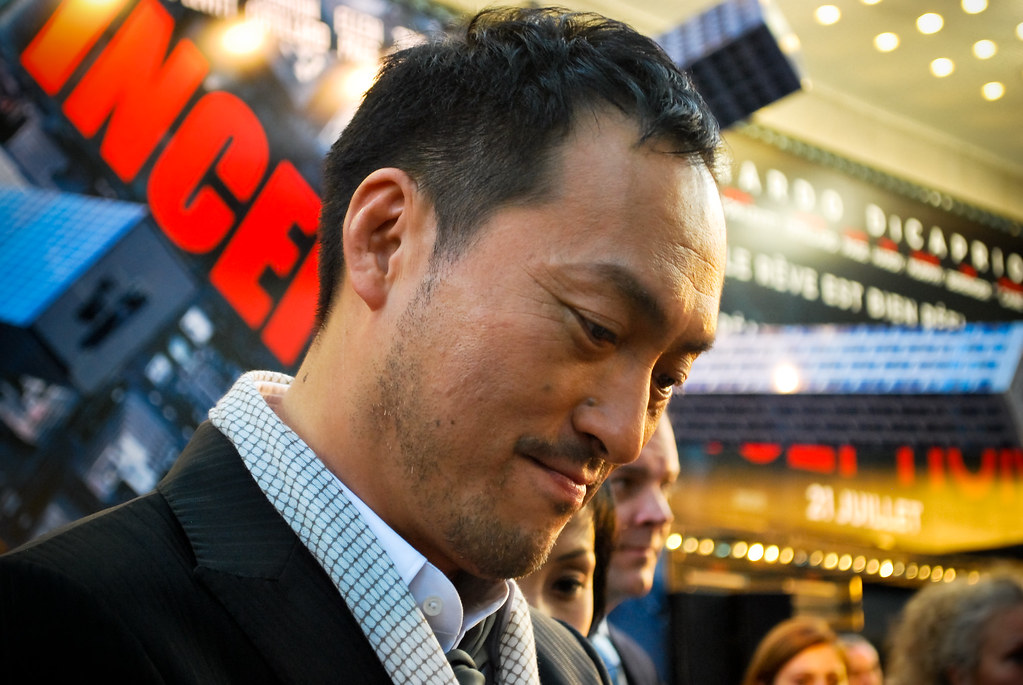
Ken Watanabe at Inception premiere Photo credit: Ninha Morandini
Just got an email from a friend that a film starring Ken Watanabe is seeking Japanese extras, male & female 18+. I was surprised that a film needing Japanese extras would be filming in Massachuesetts so I did some poking around and found out Gus Van Sant's new film Sea of Treesstarted filming last month in Foxborough. The film is about an American man (played by Matthew McConaughey) who travels to Aokigahara, a forest at the base of Mount Fuji also known as Suicide Forest or Sea of Trees, to commit suicide. (Aokigahara is one of Japan's most popular suicide locations.) There he befriends a Japanese man (played by Watanabe) and "instead of killing themselves, the duo embark on a reflective journey through the forest together."(Hollywood Reporter) The F. Gilbert Hills State Forest will stand in for Aokigahara.
The film is expected to be released next year. Should be interesting to see how it does in the US and Japan. Japan's suicide numbers have been described as epidemic (nearly twice as many as the US - see Wikipedia) though they have been declining since 2010 following the Japanese government's increased efforts to reduce their suicide rate.
Last year some I went to see A2-B-C at the Newburyport Documentary Film Festival with some Tewassa members. We just heard from filmmaker Ian Ash that they've decided to show the film twice this year. The film raises questions about whether the Japanese government and medical community are being open and transparent regarding the health of citizens, especially children, following the 2011 nuclear disaster at the Fukushima Daiichi Nuclear Power Plant. Ash doesn't have any answers, but felt it was important to help these families tell their stories. Newburyport is a little out of the way for most people but the film is definitely worth seeing.
"Synopsis: Eighteen months after the nuclear meltdown, children in Fukushima are suffering from severe nose bleeds and are developing skin rashes and thyroid cysts and nodules. Citing a lack of transparency in the official medical testing of their children and the ineffectiveness of the decontamination of their homes and schools, the childrens mothers take radiation monitoring into their own hands."
So, I’m a little embarrassed to admit that I’ve paid virtually no attention to the immigration debate because I didn't think it had anything to do with me. My mom’s parents emigrated from Okinawa to Hawaii before it was even a state, but they did so legally. My dad also came to the US legally. On the Hawaii side of my family, I’m the only one of my generation who
wasn’t born in the US, but because my mom was a US citizen and she
registered my birth abroad, I am technically not an immigrant - I automatically got US citizenship. I didn't
have to do anything for it. I did not realize how privileged that makes
me.
Since Jose is a journalist I had expected a newsy documentary with lots of facts and figures and arguments with his personal story as a backdrop, but instead the film was a deeply personal narrative about how he came to be in the United States illegally and what happened after he found out. When he was 12, his grandfather (who had immigrated to the US legally) arranged for a smuggler to bring him to the US so he could live with his grandparents and have a better life than he could back in the Philippines. When he was taken to the airport, he was told the man was his uncle. It would be another four years before he found out that his documents were fake. After that he found it easier to come out of the gay closet than the undocumented closet and he spent years mostly hiding his immigration status (sharing it with only a few trusted mentors) before eventually coming out in the New York Times Magazine at age 30. At the time he'd been living in the US for 18 years - more than half his life. The Philippines was no longer home. He considered himself an American but he had no papers to back that up. His only paths to citizenship would be to go back to the Philippines, wait ten years, then apply to come back to the US or marry an American, which was complicated by us not having equal marriage in all states and the federal government not recognizing those marriages at the time. Since DOMA was overturned, the federal government has begun to allow people in same gender relationships to sponsor their spouses. Jose told us after the film that he has 16 lawyers and they think that marrying a man might be the solution, but they're not sure.
Jose is in a rare position. So far, ICE hasn't tried to deport him. He acknowledged afterwards that he knows he's the most privileged undocumented person in America. He's educated. He has a lot of support. He has a high profile because he worked as a journalist for many years. He has a lot of connections (not too many undocumented Americans can say they know Marc Zuckerberg). He even won a Pulitzer Prize. He was quick to emphasize that his story is only one of millions, but it was a story he felt he should tell because he's in a position to do so. Much of the film focuses on the difficulties he's had with his mom who was left behind in the Philippines. He hasn't seen her in person since he left and their relationship became strained over the years after Jose learned about her part in sending him here illegally and he was upset that she didn't follow him as promised. He sent a crew to film his mom in the Philippines so you get to see both her perspective and Jose's about what it's been like for them to be separated all these years and the ups and down their relationship has gone through. Jose hoped that people would be able to connect with his story on a human level. Everyone understands family.
I was struck by Jose's path to activism. In the film he talked about watching YouTube videos of young undocumented people who were speaking up as being "undocumented and unafraid". He began to feel guilty. Here were people younger than he risking deportation to try and change things so that they and others in the same boat could get citizenship and stay in the country they call home. It reminded me a lot of why I came out. I watched a lot of It Gets Better videos on YouTube mainly from people younger than I, and I felt guilty. If they could be brave, why couldn't I? During the Q&A Jose said he saw parallels between the battles for LGBT rights and immigrant rights. He thinks immigration reform will go like LGBT rights - state by state. Equal marriage has only been possible because the culture shifted before the politics did. He believes that stories and art have the power to liberate people which is why he made the film. For the past few years he's be traveling the country showing the film and hoping to change the dialogue about illegal immigration, proving it's never too late to become involved.
I wish the Q&A had been longer and better organized. We didn't get to hear much from Jose because questions weren't screened
and most of the people who "asked questions" seemed to be more interested
in hearing themselves talk than in hearing Jose speak. The last question was really excellent though. A young American man told Jose that his best friend was undocumented. His friend is smart and interested in politics but he's feeling hopeless because right now he doesn't see a way out of his situation or a way to achieve his goals. The young man wanted to know how he could encourage his friend. Jose commended him for being a great ally and said to pass on to his friend, " I just hope you don't say no to yourself."
I would imagine that undocumented Japanese
numbers are pretty low these days given overall Japanese
immigration numbers which are down (unfortunately I couldn’t find any stats), but certainly not all the issei who came here back in the day came here legally. But that was a long time ago. Why should we care? I found a great piece on Racialicious - Japanese Americans and Immigration: Where We Fit that explains why it's still relevant to Japanese Americans. It was written by yonsei Kristin Fukushima a few years ago when she was Public Policy Coordinator for the Japanese American Citizens League Pacific Southwest District.
Until now Documented has only been shown at private screenings, but if you have cable, you can watch it tomorrow on CNN. They snagged the US distribution rights and the film will have it's television premiere tomorrow, Sunday, June 29th at 9pm ET and will air again at 11pm ET. If you miss it tomorrow CNN will air it again next Saturday, July 5th at 9 and 11pm ET. Details here.
If you're not able to watch the film on CNN, they're currently taking pre-orders for streaming or download on the film's website.
***** This post has been crossposted at Discover Nikkei, a multi-lingual Nikkei online community.
From their website:
"Discover Nikkei is a community website about Nikkei identity, history
and experiences. The goal of this project is to provide an inviting
space for the community to share, explore, and connect with each other
through diverse Nikkei experiences, culture, and history." Discover
Nikkei is coordinated by the Japanese American National Museum and supported by The Nippon Foundation.