Tule Lake was the largest and most infamous of the camps. At its peak it housed nearly 19,000 prisoners and was the site of significant unrest. While the camp started out with the same status as other camps, it was eventually designated a "segregation center" where prisoners deemed disloyal by the so-called "Loyalty Questionnaire" were separated from their families and moved from other camps. (The official title of the document was "Selective Service Form 304A / Statement of United States Citizen of Japanese Ancestry".)
Note: Dinner will be served. Film screening followed by panel discussion with students whose families were incarcerated in Japanese American incarceration camps.
Resistance at Tule Lake
2017 | 80 mins | Documentary | Japanese-American
Directed by Konrad Aderer
Resistance at Tule Lake tells
the long-suppressed story of 12,000 Japanese Americans who dared to
resist the U.S. government’s program of mass incarceration during World
War II. Branded as “disloyals” and re-imprisoned at Tule Lake
Segregation Center, they continued to protest in the face of militarized
violence, and thousands renounced their U.S. citizenship. Giving voice
to experiences that have been marginalized for over 70 years, this
documentary challenges the nationalist, one-sided ideal of wartime
“loyalty.”
Resistance at Tule Lake premiered
early 2017 and continues to screen in various film festivals, museum
exhibitions, educational institutions and local community
organizations. The
documentary will be broadcast nationally in 2018 and made available for
educational, institutional and home use as a DVD and other formats
including Internet viewing.
The play
tells the story of Gordon Hirabayashi, a nisei Japanese American who
defied the US government's curfew and evacuation orders. Instead of reporting for evacuation to an "assembly center", he turned himself in to the FBI and was arrested and
convicted. Hirabayashi appealed his case all the way to the Supreme Court
(Hirabayashi v. United States) where the order was upheld. In the 1980s
his convictions were finally overturned by the U.S. District Court in
Seattle and the Federal Appeals Court after misconduct in the solicitor
general's office was discovered.
Boston-based Michael Hisamoto stars as Gordon Hirabayashi. In the spring, he will be playing Mike Masaoka in SpeakEasy Stage Company's upcoming run of Allegiance (May 4 - June 2, 2018). Although Hold These Truths is ostensibly a one-person show, the play borrows the kabuki method known as kuroko (黒子, also romanized as "kurogo") which uses stage crew dressed in black who assist in set changes and moving of props during the performance and who may also play minor roles.
The New England chapter of the Japanese American Citizens League (JACL) is hosting an outing to see HoldTheseTruths this Sunday, December 17th at 3pm. Dr. Paul Watanabe, Director of the Institute for Asian American Studies at UMass Boston, will lead a post-show discussion as JACL members share stories of their families' experiences during WWII. There are still a few tickets available for Sunday's performance. If you can't make it this Sunday, the play runs through the end of the month.
Hold These Truths
Directed by Benny Sato Ambush
Choreography by Jubilith Moore
Featuring Michael Hisamoto*, with Khloe Alice Lin, Gary Thomas Ng*, Samantha Richert*
Approximately 100 minutes with no intermission
Told through flashbacks, Hirabayashi takes us through his early life, challenging the curfew and exclusion orders in 1942. In a virtuosic turn, Hisamoto portrays not only Hirabayashi, but also his parents, college friends, lawyers, military leaders, Supreme Court justices, Hopi Indians he meets in prison, and the Arizona prison boss who can't figure out why he has hitchhiked down the California coast for his own imprisonment. His storytelling is assisted by a trio of kurogo — traditional Japanese stage hands — choreographed by Jubilith Moore and directed by Benny Sato Ambush.
He may have lost his case when he was alive, but Hirabayashi, a Quaker ("God is in each heart, not in a church") and a University of Washington student who was active in the YMCA leadership training program, was posthumously awarded the Presidential Medal of Freedom in 2012 by President Barack Obama. Paving the way to Hirabayashi's ultimate victory, legal historian Peter Irons discovered myriad military documents, letters, and memos admitting that confining Japanese Americans to camps had not been a necessary security measure: The camps, they implied, were created out of hysteria and racism. Full of theatricality and humanity, Hold These Truths celebrates resistance and offers startling parallels for contemporary politics.
Dates
Friday, December 1 - Sunday, December 31, 2017
See website for details.
Admission Tickets range from $25-$73 and if you use the coupon
code BAAFF (via the Boston Asian American Film Festival) it will get you
$20 off per ticket. (FYI, I've heard some reports of some people having difficulty with the code.)
Lyric Stage also offers $10 cash student rush tickets. See website for details.
The 9th annual Boston Asian American Film Festival runs from October 19th to the 22rd. Three Four films in this year's festival have Japanese American themes. I'm very excited that Japanese American filmmaker Konrad Aderer is returning to Boston for the New England premiere of Resistance at Tule Lake, this year's Centerpiece Film. The last time he was in Boston was five years ago when his first documentary, Enemy Alien, was co-presented by BAAFF at the 2012 Boston Palestine Film Festival. Check out the other films here.
It Is What It Is 2016 | 8 mins | Documentary| Japanese-Iranian
Directed by Cyrus Yoshi Tabar
It
is What it Is Filmmaker Cyrus Yoshi Tabar, a first-generation
Iranian-Japanese-American, has a photo of his grandparents holding him
as an infant. The photo captures his first and last encounter with
them. Seeking to understand the fracture in his family, Cyrus embarks
on a journey into the dark and nebulous corners of family history.
Fragmented and cloudy images of his family speckle his investigation
as he talks to his aunt and sister, but discovers that a family’s
narrative isn’t linear and that truth’s elusive.
Dorothy Takahashi, a Japanese American dancer born in 1917, performed under the stage name Dorothy Toy with her partner Paul Wing. During WWII, her family was incarcerated at Topaz. Dorothy escaped incarceration by going to New York with Paul. She was believed by many to be Chinese but gossip columnists outed her as Japanese, costing her film roles. Dancing Through Life tells her story.
NBC News: Dorothy Toy, the ‘Chinese Ginger Rogers,’ Found Stardom Amid World War II
99
year old Dorothy Toy Fong is a living dance legend. She began as a
child after a vaudeville theater manager noticed her dancing in front of
her parent's restaurant. During the 1930's, 40's and 50's, she teamed
up with Paul Wing and would eventually become the most famous Asian
American dance duo in this country's history. Known for dancing on her
toes, she developed a unique, athletic style of performing. Toy and Wing
were pioneers, performing on Broadway and in Hollywood films. They were
also the first Asian Americans to dance at the London Palladium.
Koji
Oshima is the proud owner of a small corner grocery store, but he must
now abandon everything and report to an assembly center. His belongings,
his business – everything must be sold or left behind, except what he
can carry in one large duffel bag.
Up against a wall, Koji
receives only one low-ball offer for his store, which he has no choice
but to accept. The lone bright spot during this turmoil is the
friendship Koji develops with a precocious nine-year-old girl. On the
day of his departure, however, Koji is saddened to learn that even this
friendship has been tainted by the larger forces of fear and wartime
hysteria.
This is director Konrad Aderer's second feature length documentary about the Japanese American incarceration. Although Konrad's family was incarcerated at other camps, he told me that he chose Tule Lake as the subject of his film because he said he's always been interested in the Japanese and Japanese Americans who resisted.
2017 | 80 mins | Documentary | Japanese-American
Directed by Konrad Aderer
RESISTANCE
AT TULE LAKE tells the long-suppressed story of 12,000 Japanese
Americans who dared to resist the U.S. government's program of mass
incarceration during World War II. Branded as 'disloyals' and
re-imprisoned at Tule Lake Segregation Center, they continued to protest
in the face of militarized violence, and thousands renounced their U.S.
citizenship. Giving voice to experiences that have been marginalized
for over 70 years, this documentary challenges the nationalist,
one-sided ideal of wartime 'loyalty'.
See trailers for 14 films in this year's festival:
Edit History
10/17/17 10:59pm: Added It Is What It Is. Not sure How I missed it!
Correction 5/31/17: Someone just pointed out to me that I had written the Saturday hours were on June 2nd. Saturday is actually June 3rd.
It is really unusual to have exhibits on the WWII Japanese American experience in the Boston area. The Transit Gallery at Harvard Medical School is currently
exhibiting part of a very rare collection of photos from a Japanese
American soldier who served in Europe in the segregated all Japanese American 442nd Regimental Combat Team. I checked with the New England chapter of the Japanese American Citizens League and we believe this may be the first exhibit in the Boston area to focus on the 442nd. I'm not even sure if other photos like these exist.
Dr. Susumu Ito or Sus as he was known to those of us who knew him, took his 35mm Agfa Ansco
to war against orders. In 2015 he told the Los Angeles Times, "I wanted
to take [my camera] because we weren't allowed to. I like to break the
rules."
Left & right: Japanese American soldiers in the 522nd Field Artillery Battalion Center: Ito's family in incarceration at Rohwer War Relocation Center
Sus was 21 when he was drafted in 1940, prior to US entry into WWII. He served in a non-segregated Quartermaster truck and
vehicle maintenance unit at Camp Haan near Riverside, California. After the attack on Pearl Harbor, Sus was sent to Fort Sill in Oklahoma and restricted to civilian duty as a mechanic. In 1943 he was selected to join the 442nd and assigned to
the 522nd Field Artillery Battalion,
the artillery unit of the 442nd. While Sus was stationed at Fort Shelby in Mississippi, his family was being unjustly incarcerated at the Rohwer War Relocation Center in Arkansas. He was able to visit them once before deploying to Europe and took photos of that visit. Cameras were initially banned inside War Relocation Authority incarceration camps and although restrictions were eventually lifted in the spring of 1943, few candid photos of camp life exist.
Photograph and note to Ito from Larry Lubetski, former Dachau
Concentration Camp prisoner. Lubetski was a Lithuanian Jew who was only a
teenager when the 522nd Field Artillery Battalion helped to rescue him
after the liberation of Dachau.
Sus and his camera went thousands of
miles all over Europe. He documented everything he saw along the way –
from Nazi soldiers and their prisoners (he helped to liberate Dachau) to
the daily life of his fellow Japanese American soldiers between
battles. Sus
was a prolific photographer, taking thousands of photos, many of which
he sent to his mom to let her know he was okay. The exhibit showcases
just a fraction of the collection.
Silhouettes of six German soldiers retreating westward at dawn in Germany. Spring 1945
After the war Sus continued his education with the help of the G. I. Bill and after receiving his PhD from Case Western Reserve University became
a postdoctoral fellow at Cornell Medical School in the lab of Don W. Fawcett, Chair of the Department of Anatomy. When Dr. Fawcett was
appointed Chair of the Department of Anatomy at Harvard Medical School
in 1960, he brought Sus along with him as an associate professor. After
retiring in 1990, Sus, as an Emeritus professor, remained active in the lab until 2014, happy to assist postdocs with electron microscopy, a field that he and Dr. Fawcett pioneered.
Ito on rest and recuperation, posing with his arm around the Eiffel Tower in Paris, France. Summer 1945
The exhibit was first displayed at the Japanese American National Museum in Los
Angeles, California in the late summer of 2015. Sus passed away just a few weeks
after the JANM exhibit closed. He was a beloved member of
Boston's Japanese American community and of the Harvard Medical School community.
In 1994, the Japanese American National Museum received a donation of several dozen 35mm film canisters and their contents from World War II veteran Susumu "Sus" Ito. While serving in the all-Japanese American 442nd Regimental Combat Team's 552nd Field Artillery Battalion, Ito took thousands of photographs and carried them nearly five thousand miles across Italy, France, and Germany during his wartime service.
In part, Ito took these photos to send to his mother, who was incarcerated at the Rohwer War Relocation Center. The snapshots depict a previously unseen and close-up view of the Nisei soldiers and their everyday experiences. Through the lens of Ito's camera, these young men are just that–young men, away from home and family, serving their country in a time of war. While some of the images capture the soldiers' heroism, most of the photographs show the smaller, human moments of daily life.
Unseen for over seventy years, Sus Ito's thousands of photographs provide a rare window into one person's extraordinary experience of everyday life as a soldier during World War II.
Ito's collection captures the iconic moments often associated with the 442nd Regimental Combat Team–from the rescue of the Lost Battalion to the liberation of two Dachau subcamps.
But these intense moments of war are punctuated by long periods of boredom and waiting. From Ito reading a Superman comic to soldiers stomping on grapes to make wine, the photos notably depict the more routine activities of wartime life. Ito purposefully captured and sent these snapshots to his mother as a way [to] reassure her of his safety.
Today, the collection of photographs stands as a unique record of an important period in American history.
This exhibit was organized by the Japanese American National Museum in Los Angeles, and is sponsored by the Harvard Medical School Office of Human Resources, the New England Japanese American Citizens League, Dr. James Adelstein, Atsuko Fish, and May & Tetsuo Takayanagi.
The original exhibit also contained artifacts and videos which due to
space and equipment limitations are not included in the Transit
Gallery's exhibit. Later this year the exhibit will travel to the Fullerton Arboretum in Fullerton, CA from September 11th to December 1st. If you are interested in booking the exhibit, please contact the Japanese American National Museum.
Hours
Open through Monday, June 26, 2017
Regular Hours: Monday-Friday, 9am - 5pm
Special hours: Saturday, June 3, 2017, 1pm - 5pm Note: If you are not a member of the Harvard Medical School community, please contact Tania Rodriguez in advance to ensure access to Gordon Hall.
Directions & Parking
Getting to Gordon Hall is a bit of a challenge. Taking the Green Line is your best option. The closest T stop is Brigham Circle on the E Line. You can access Shattuck St. by walking through the courtyard behind the Countway Library of Medicine (the entrance to the courtyard is between the Countway Library and Harvard School of Public Health).
There is some 2 hour metered parking along Huntington Ave. but not a lot. Most of the nearby parking garages are attached to hospitals and I'm not sure if they are open to the public. The closest garage that I believe is open to the public is the Longwood Galleria Garage at 350 Longwood Ave. See rates here.
San Francisco, California, 1942.
Exclusion Order posted at First and Front Streets directing removal of persons of
Japanese ancestry from the first San Francisco section to be effected by the evacuation. Dorothea Lange, National Archives Identifier: 536017
Today is the 75th anniversary of the Day of Remembrance, the day President Franklin D. Roosevelt signed Executive Order 9066, which allowed the US government to incarcerate Americans and foreign nationals during WWII. The largest DOR event being organized in the Boston area by the New England chapter of the Japanese American Citizens League and the MIT Center for International Studies is on Saturday. There is also an event at Tufts on Thursday.
If anyone knows of any other DOR events happening later this month, please let me know and I will update this post. You can also submit events to the Never Again Facebook community that was put together by people in the national Japanese American community. The community is public but note that the Events page doesn't seem to be visible if you don't have a Facebook account.
Please
join Tufts Japanese Culture Club and Muslim Student's Association to
commemorate Day of Remembrance. Together, we remember the lives affected
and lost by Executive Order 9066, which President Franklin D. Roosevelt
signed and authorized the forced removal of 120,000 Japanese Americans
from their homes on the West Coast during World War II. Through our
personal stories of family members interned and Islamophobic violence
following 9/11, we strive to illuminate moments in American history in
which groups are casted as “enemy alien” and disloyal. We must view
today’s Executive Orders against immigration as fully connected to the
past.
This evening's event will feature:
- "PILGRIMAGE", a documentary by Tad Nakamura
that tells the inspiring story of how an abandoned WWII concentration
camp for Japanese Americans has been transformed into a symbol of
retrospection and solidarity for people of all ages, races and
nationalities in our post 9/11 world.
- PERSONAL STORY SHARING
about our families' experiences in internment and following 9/11. Hear
from Japanese Culture Club and Muslim Student's Association members, Anna
Kimura, Joseph Tsuboi, Chelsea Hayashi, Shaan Shaikh, and Nazifa
Sarawat.
The
panel will begin with reflections on the 75th anniversary of internment
of Japanese Americans, then assess and respond to issues raised by the
current wave of Islamophobia and xenophobia.
Parking & Transportation
Two hour metered street parking is limited due to construction and Cambridge tickets aggressively. There are several nearby parking garages, but all are expensive.
I grew up a dual national. I was born in Japan but my mother is an American citizen so she reported my birth abroad (see also: Wikipedia). The United States uses the jus sanguinis – meaning "right of blood" – principle to determine nationality so because my mother was a US citizen, she could apply to have my birth recognized by the US, thus giving me citizenship.
Having spent the majority of my life in the US, when it came time for me to choose a nationality, the obvious choice was to renounce my Japanese citizenship. I was attending college in the US, could no longer speak Japanese fluently and had no plans to ever return to Japan to live. I had also been living under the illusion that I had fully assimilated into American society.
The first time I came to regret my choice was during the 2000 election. Friends with European heritage looked into the possibility of applying for citizenship in their families' homelands and some actually went through with it. But as terrified as I was of living under a Bush presidency, my life was here and my Japanese fluency had only declined since I had renounced my citizenship. I figured that it was an impossible task. Then I thought about it again in 2004 and on and off since then. It's been on my mind ever since Donald Trump became the Republican nominee.
The US and Japan have enjoyed a surprisingly cozy relationship for the past 71 years given the brutal history of WWII. When I read about the Japanese American incarceration and the bombing of Hiroshima and Nagasaki I frankly do not understand how Japanese and Japanese Americans are able to embrace America. However, at this point it's difficult to imagine the US-Japan relationship deteriorating any time soon given that the two nations are dependent on one another. But who knows. I don't think that Japanese Americans in the 1940s thought that what happened to them could ever happen.
I used to feel secure in my status as a US citizen but as I have gotten older I have realized that for some Americans, you're only American as long as it's convenient for them. It doesn't matter that my mom's side of the family has been here for more than 100 years – for some people that's not long enough. I also have a Japanese father and the United States is not the land of my birth. The only reason I have US citizenship is due to a legal technicality. While I believe these people represent only a small fraction of Americans all it takes is for a few of the wrong people to be in power.
One of my friends who is Jewish (though not religious) sent me this text earlier today about something her seven-and-a-half-year-old half-Jewish daughter had said: "Did I tell you that [my daughter] said 'I don't want Donald Trump to be president. I don't want to do the Anne Frank thing.'" [She learned about the Holocaust and Anne Frank from BrainPOP]. I asked why her daughter was scared given that they aren't Muslim and my friend said: "She knows that she is Jewish, and she knows he wants to ban people of one religion. And she knows all about the Holocaust. She is afraid of being rounded up. I cried when I assured her that wouldn't happen no matter who wins." Parents in democratic countries should not have to have these conversations with their children.
I never thought that in my lifetime I would see a return to the sort of
racist injustice and fearmongering that led to 120,000 Japanese and
Japanese Americans being locked up by the US government for the crime of
being Japanese, yet here we are. Earlier this year American-Japanese artist Setsuko Winchester wrote about a conversation she had with a park ranger at Tule Lake in which he told her that they had seen an increase in the number of visitors last year. "The problem he said was that they weren’t coming to
uncover this dark part of US history. Rather, they were coming because
“they wanted to know how internment worked” — and they were doing so
“because they heard Trump and some mayor say it was an example the
government might re-think to solve the Muslim-American problem." This story has haunted me ever since.
With that in mind, I decided it was time to stop wondering and find out what else besides intensive language lessons I would need to reacquire my Japanese citizenship. I called the Consulate-General of Japan in Boston and the staffer I spoke with kindly emailed me some links after our call.
The first step in reacquiring Japanese citizenship seems to be to live in Japan for a minimum of three years (the residency requirement for foreign nationals who do not have a Japanese parent is ten years) as laid out in Article 6 (ii) of the Nationality Act. In order to do that I was told that the relevant visa is the one for "Spouse/child of Japanese national". Although it does seem that in the case of a former Japanese national the Minister of Justice can permit naturalization if you have a domicile in Japan per Article 8 (iii) so I'm not entirely sure if I bought property in Japan if I could bypass the three year residency requirement.
Article 6 The Minister of Justice maypermitnaturalization for a foreign national currently having a domicilein Japan who falls under one of thefollowing items even if thatperson has not met theconditions listed in the preceding Article, paragraph (1), item (i):
(ii) A person born in Japan, and continuously having a domicile or residencein Japan for three years or more or whose father or mother (excluding an adoptive parent) was born in Japan;
It seems that the biggest hurdle to reacquiring my Japanese citizenship would be my lack of fluency. At my age and given how complex Japanese is, it feels like it would be nearly impossible but there's that old aphorism: "desperate times call for desperate measures." Renouncing my US citizenship might ultimately be the most difficult part since the bulk of my family is in the US.
Japan has its own problems and their fate is closely tied to the US's but sometimes I feel like if I'm going to live in a country where I'll never be fully accepted would I rather live here or in Japan? It's not an easy question to answer. This election cycle it has felt like the US is regressing,
not moving forward. Some would argue that Japan is having similar
problems with rising Japanese nationalism and attempts to return to more traditional values but when I hear news
about changing attitudes towards Okinawans and gaikokujin and see the
incredible aerial footage of mass anti-nuclear, anti-security bill (article), and anti-US military
protests it feels like Japan is poised to make some real progress. It could be a grass is greener on the other side of the Atlantic fantasy but at least now I know what my options are.
Disclaimer: Any errors in this piece are due to my own misunderstanding. If you are thinking about returning to Japan and reacquiring your Japanese citizenship please contact your local embassy, consulate, or permanent mission for more information.
From their website:
"Discover Nikkei is a community website about Nikkei identity, history
and experiences. The goal of this project is to provide an inviting
space for the community to share, explore, and connect with each other
through diverse Nikkei experiences, culture, and history." Discover
Nikkei is coordinated by the Japanese American National Museum and supported by The Nippon Foundation.
The 8th annual Boston Asian American Film Festival runs from October 20th to 23rd. This year's festival has films from a Japanese American filmmaker, a
Japanese-Brazilian filmmaker, a Japanese animator, and a film about a
local Japanese American mental health activist. Check out the other films here.
I'm really excited that Emerson College alum Matthew Hashiguchi's film Good Luck Soup will be screened for free at BAAFF! The film is being co-presented with Emerson's Bright Lights Series. Good Luck Soup is a transmedia documentary. Check out the film's interactive site. This is Matthew's second film at BAAFF. People Aren't All Bad with Yutaka Kobayashi was in the 2012 Shorts Program.
Directed by Matthew Hashiguchi 2016 | 70 mins | USA | Documentary
After
years of rejecting his Japanese heritage, filmmaker Matthew Hashiguchi
sets out on a humorous yet insightful journey to discover if his joyful
grandmother and other family members also struggled with their Japanese
American identities, just as he did while growing up in a predominantly
white neighborhood in the Midwest. Along the way, Matthew uncovers the
family’s decades-long struggle to assimilate into the Midwest and
obtains insightful, yet humorous wisdom from his grandmother on how she
overcame racial adversity after leaving the WWII Japanese American
Internment Camps.
Leandro Tadashi, a Japanese-Brazilian filmmaker, filmed Bá in Brazil. The full film can be seen on Vimeo (click the blue "CC" for subtitles in English, Japanese, Spanish, French and Portuguese!). I emailed with Leandro and learned that his grandmother, Yuriko Miamoto Shimata, plays Bruno's Bá. She also starred in his 2011 short Oyasuminasai. Unfortunately, Leandro won't be able to make it for the Q&A.
Bá
Written & directed by Leandro Tadashi 2015 | 14 mins | Brazil | Drama
Tells the story of a little Japanese-Brazilian boy named Bruno,
whose life is turned upside down when his "Bá" (from Bāchan, grandma in
Japanese) is brought to live in his house.
Pata
Directed by Kathryn Klingle
2016 | USA | 9 mins | Documentary
"Pata" explores what role chronic depression has played in the life of Pata Suyemoto--teacher, artist, mental health activist.
Asian CineVision has an interesting interview with Masayuki Kusaka, the producer of Harry on the Clouds. The film was originally produced as a music video for the Japanese band, RAM WIRE, with the title 僕らの手には何もないけど (Bokura no te ni wa nani mo naikedo) "Although there is nothing in our hands". They changed the soundtrack and sent it off to film festivals around the world. [Special thanks to Sachiko T for translation help!]
Harry on the Clouds
Directed by Aya Shiroi (城井文)
2016 | Japan | 4 mins | Drama (Animated)
Mother sheep can't wake up because Harry was gone. But Harry is looking his mother from the clouds.
See trailers for 16 films in this year's festival:
Directed by Shirley Kazuyo Muramoto-Wong
2014 | 56 mins | Documentary
“Hidden Legacy: Japanese Traditional Performing Arts in the World War
II Internment Camps” is the full title of this documentary, using
historical footage and interviews from artists who were interned to tell
the story of how traditional Japanese cultural arts were maintained at a
time when the War Relocation Authority (WRA) emphasized the importance
of assimilation and Americanization. Various essays and studies
concerning the camps have been published, but have focused on the
political and legal aspects of the internment, while hardly mentioning
cultural and recreational activities in the camps. When cultural and
recreational activities have been documented, they have focused on
American culture, such as baseball and swing music. This film will be
the first major presentation of the existence of traditional music,
dance and drama in the camps. It is possible only because Shirley
Kazuyo Muramoto-Wong has been searching, researching and collecting for
over 20 years information on who these artists were. She has collected
interviews, oral and visual histories, as well as artifacts from the
internees and relatives of internees, including teachers, students, the
performers, and the incredible artists who made instruments, costumes,
and the props needed for a full performance from scraps of wood,
toothbrush handles, gunny sacks, paint, and whatever they could scrape
up. Her own family’s history with the camps led her to become a kotoist
and teacher of the Japanese koto (13-stringed zither).
Very little is known of the existence of traditional Japanese
performance arts in the camps. The artists Muramoto-Wong has
interviewed are all Americans, all born here, but practiced Japanese
arts before the war, during, and after the war, because they loved the
art. This made them “social activists” in their own quiet way,
continuing the music and dance they loved, helping others to learn and
enjoy these arts, and to help draw their attention away from their
surroundings, giving them pride and self-esteem. Their efforts kept
Japanese cultural arts alive in our communities today.
We have interviewed 30 artists in the fields of music (koto, nagauta
shamisen, shakuhachi, shigin, biwa), dance (buyo, obon) and drama
(kabuki) who were interned at Tule Lake, Manzanar, Amache/Granada,
Rohwer, Gila River, and Topaz. We have interviewed Prof. Minako Waseda
of Geijutsu Daigaku University of Music and Arts, and Kunitachi College
of Music, both universities in Tokyo, whose research thesis,
Extraordinary Circumstances, Exceptional Practices: Music in Japanese
American Concentration Camps, had written the only scholarly work that
had been published on this subject. We are also interviewing students
of these arts in America, some who learned from these artists, and some
who are carrying on the tradition in our communities today, and some who
have taken this knowledge, and expanded creatively and artistically in
various imaginative ways.
Film locations include camps at Manzanar, Tule Lake, Heart Mountain;
locations in Japan, such as Osaka, Kyoto, 3 Tokyo music universities
(Tokyo Ongaku Daigaku, Geijutsu Daigaku, Kunitachi College of Music);
Cherry Blossom Festivals in San Francisco and Cupertino; San Jose Obon
Festival; Chidori Band 59th Anniversary Concert; Japanese American
Museum of San Jose; dance studio of Bando Misayasu (aka Mary Arii Mah),
and koto studio of Shirley Kazuyo Muramoto-Wong.
Event Information
Film screening followed by Q&A with creative director Shirley Kazuyo Muramoto-Wong and
actress Takayo Fischer with koto performance by Shirley Kazuyo Muramoto-Wong.
Date & Time
Monday, October 24, 2016
3:00 - 6:00pm
Location
UMass Boston
McCormack Hall, Ryan Lounge, Room M-3-721 (3rd floor)
Dorchester, MA 02125
Morrissey Satellite Lot (75 Morrissey Boulevard) Herb Chambers
property next to the Boston Globe building
St. Christopher’s Church across from the Bayside Lot
Admission
Free
Date & Time
Wednesday, October 26, 2016
7:00 - 9:00pm
Location
Wellesley College
Acorns House (building not on map - head toward the lake, pass Clapp Library and Acorns House is to the right of Harambee House)
106 Central Street
Wellesley, MA 02481
Date & Time
Thursday, October 27, 2016
6:30 - 8:30pm
Location
Brandeis University
Mandel Center for the Humanities, Room G12
415 South Street
Waltham, MA 02453
Directions/Parking
After 5pm visitors may park anywhere. Tower Lot is closest to the Mandel Center.
Admission
Free
Special thanks to Kimi Maeda for making the introductions that allowed us to get Hidden Legacy screened at Brandeis!
About the Creative Director
Shirley Kazuyo
Muramoto-Wong was raised in a musical family whose roots lie in the Chikushi
Kai School of kotoists in Japan. Her mother is a respected head of
the Chikushi Kai in the Bay Area, with close ties to her teachers in
Japan. Shirley was taught within that tradition, learning and constantly
performing the core of traditional pieces shared by all koto groups and
also the repertoire particular to the Chikushi Kai. Importantly, it is
a group which is also open to contemporary music for the koto, so that
her repertoire encompasses such works as the compositions of Tadao
Sawai, Katsutoshi Nagasawa and Shinichi Yuize. From that spirit of
open-mindedness (within tradition), Shirley also pursued her interest in
jazz and as it extends to the koto, and improvisation.
In
1976, Shirley received her “Shihan” degree (instructor’s license) with
“Yushusho” (highest) honors from the Chikushi School in Fukuoka, Japan,
and her "Dai Shihan" Master’s degree from the same school in 2000 for
her mastery of the koto.
A
dedicated musician for over 50 years, Shirley strives to involve
diverse genres of art and music in her performances. She teaches
private students, and has offered classes in koto music at public
schools and at universities, most notably classes at UC
Berkeley. Shirley has incorporated storytelling, poetry, hip-hop,
gospel, bluegrass, jazz, European classical, and has arranged world
songs from countries such as China, Ethiopia, Guatemala, Philippines and
so on, for koto, as well as performing and arranging traditional and
contemporary Japanese songs, and composing her own koto pieces. She
also is the leader of the world jazz fusion group, the Murasaki
Ensemble.
“The
koto is an extremely versatile instrument,” says Shirley. “Though it
seems limited and simple in its nature, it’s possible to extract a
myriad of textures and sounds through various techniques and even
percussive rhythms by incorporating the body of the instrument itself.
The koto is initially easy to play, but it really takes years of
practice to be able to produce a good sound.”
Shirley’s
koto influences include koto masters Katsuko Chikushi, Kimio Eto, Kazue
Sawai, and June Kuramoto. Her jazz influences come from the members of
the her jazz group, the Murasaki Ensemble, who are Vince Delgado on
percussion, Jeff Massanari on guitar, Matt Eakle on flute, and Alex Baum
on bass.
Because of Shirley’s versatility on the koto, she has performed for many notable people and celebrities, such as: Senator
Diane Feinstein, George Lucas/Lucas Films, former Prime Minister
Yasuhiro Nakasone, Walter Shorenstein, Larry Ellison and Mikael
Gorbachev. She has also performed at many eclectic events from the
Fillmore and Union Street Jazz Festivals to the AT&T Golf Tournament
hosted by Clint Eastwood, Christina Aguilera, and the Sacramento,
Marin, and Fremont symphony orchestras. Shirley has performed at
numerous community events, and given of her time to many of them,
including annual Cherry Blossom Festivals in San Francisco and
Cupertino, many Obon festivals in Oakland, Palo Alto, Mountain View and
San Jose, just to name a few. In 2012, Shirley was honored by the Hokka
Nichibei Kai Bunka Japanese American Cultural Association of America by
being inducted into their Hall of Fame.
Shirley has
been most interested in researching Japanese traditional performance
arts in the World War II concentration camps, after finding out that her
mother learned to play the koto from koto teachers at Topaz and Tule
Lake camps during WWII. In 2012, she was awarded a National Parks
Service, Japanese American Confinement Sites grant to turn her
decades-long research into a documentary film. The film, “Japanese
Traditional Performance Arts in the World War II Internment Camps”
completed in 2014, includes interviews and stories from 21 people who
experienced Japanese performing arts in the camps, or were taught by
teachers from the camps, archival photos as well as actual film footage
of performances in the camps. Hidden Legacy has
been screened publicly at numerous community showings, at universities
including UC Berkeley, UCLA, Stanford, Tokyo Arts, Waseda, Musashino and
Doshisha Universities, and aired on public TV across the United States
since its premiere.
Takayo Fischer
Actress
Takayo Fischer learned kabuki, buyō, and shamisen while she
was interned at the Rohwer War Relocation Center in Arkansas during
WWII. She is best known for her roles as Mistress Chang in Pirates of the Caribbean: At World's End and as Suzanne, the secretary to Brad Pitt's character, Billy, in the film Moneyball.
Takayo is active with the renowned Asian American theater organization
East West Players in Los Angeles and has acted on Broadway.
6/16/16 Update: Robert Maeda's memorial service will be held on Saturday, June 25, 2016 at 3pm at Brandeis University in Rapaporte Treasure Hall in the Goldfarb Library, 415 South Street, Waltham, MA 02453. The service is open to the public.
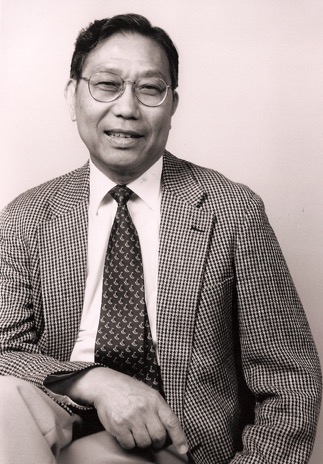
I learned a couple of weeks ago that one of our local Japanese American community leaders passed away last month. Robert J. Maeda was Professor Emeritus of Fine Arts at Brandeis University where he taught for 33 years before retiring in 2000. He was the first Asian American hired by Brandeis to teach Asian Art. The Brandeis Fine Arts Department described him as "an inspiring teacher for generations of Brandeis students, a cherished
colleague and friend, and a warm, re-assuring presence to all who knew
him." Robert was also former president and long-time member of the board of the New England Chapter of the Japanese American Citizens League.
I never met Robert, but I did meet his daughter, theatre artist Kimi Maeda, when she performed a very moving play about her father's life and his struggle with dementia at Brandeis last year. Kimi is about to start a Northeastern tour of that show and will be performing Bendin Boston from Friday, February 19th to Saturday, February 27th. I encourage people to attend and support Kimi in her journey to keep her father's memory alive. The following essay was published in the New England JACL's mid-February newsletter.
A special message from Kimi Maeda
Robert Maeda’s daughter, Kimi, is undertaking a Northeastern tour of Bend, her one-woman stage production created to honor her father’s experiences during World War II. She sent us this message.
For the past few years my father has been slowly fading away. The illness that began as a wrong turn on a familiar drive home eventually reduced him to the shallow breathing that kept us on edge by his bedside. When he died, he left an emptiness in his wake.
People ask me if it is difficult to be doing a performance about his life so soon after his death. In some ways I think it is actually comforting. I created this show during his illness as a way to cope with everything that I was feeling. Rehearsing in preparation for the tour has been similarly therapeutic. I come into the studio every day and draw my dad over and over again while I listen to recordings of his voice. I am memorizing the shape of his face and the wrinkles on his brow. He feels very present, and that is filling the emptiness.
Bend is about forgetting, but it is also about memory. The New England Chapter of the JACL and I originally intended this Day of Remembrance Tour to commemorate Roosevelt signing Executive Order 9066 which led to the incarceration of Japanese American families on the West Coast after the bombing of Pearl Harbor. Now I think it is actually a fitting memorial for my father, as well.
A friend of mine whose father died recently wrote that “After the initial flurry of burial, obituary, and funeral arrangements passed, I began to think more about my dad from when he was healthy. The years of sickness have faded more, and the memories of my dad through all the years of my childhood and beyond have become stronger. It was like when my dad passed, the years of illness did too, and I was left with the times of what really mattered.” In Bend I express my fear that my father’s memory will be forgotten. However, this tour is not only allowing me to keep his memory present, it is also giving me the opportunity to share his story with so many people.
The following tribute to Robert was included in the New England JACL's mid-February newsletter.
New England JACL has lost a wonderful friend, Robert Maeda. Robert passed away on Saturday, January 30, at the age of 83. He served as our JACL president in the 1980s and was active in the Japanese American community’s successful efforts to fight for reparations for families incarcerated in American’s concentration camps during World War II. He was a long-time member of our chapter’s Board and was always available to us as a speaker on any subject we required, especially on the arts. Robert was a professor of Asian Art at Brandeis University until his retirement in 2000. During his career he was a prolific scholar and his research centered around paintings from the Sung Dynasty as well as the Japanese American artist, Isamu Noguchi. Robert is survived by his wife Nobuko of Concord, MA; his daughter Kimi of Columbia, SC; and his sister Edith of Skokie, IL. A memorial service will be held later this year. For the Concord Journal obituary, go to: [Legacy.com].
Robert's official obituary, which was published in The Concord Journal, can also be seen at Legacy.com.
Robert J. Maeda passed away on Saturday, January 30 at age 83. Robert was the
Robert B. and Beatrice C. Mayer Professor of Fine Arts, Emeritus at Brandeis
University and was a longtime resident of Concord, MA. He is survived by his wife
Nobuko, of Concord, MA, his daughter Kimi, of Columbia, SC and his sister, Edith, of
Skokie, IL.
Robert was born in El Centro, CA in 1932, the seventh child of Junichi and Tetsue
Maeda. In 1942, the family was sent to the Colorado River Relocation Center in
Poston, AZ as one of the thousands of Japanese American families forced into
incarceration during WWII. From Poston, Robert moved with his family to Chicago,
IL, where he eventually graduated from Lane Tech High School in 1950. He
received a B.A. in Western Art History from the University of Illinois in 1953.
Beginning in 1954, he served a total of eight years in the US Army and Army
Reserves achieving the rank of Specialist, 4th Class. In 1960, he received an M.A. in
Asian Art History from the University of Michigan and in 1969 completed his PhD at
Harvard University in Asian Art History.
In 1967, Robert was hired as the first Asian American professor to teach Asian Art at
Brandeis University. He spent his entire teaching career at Brandeis, retiring in
2000. Throughout his career, Robert was the recipient of many fellowships and
awards, including a Fulbright fellowship in 1964 that took him to Japan. In 1973
Robert was a member of the Chinese Archaeology Delegation, the first group of art
historians from the US to visit China. A prolific scholar, Robert’s research centered
around paintings from the Sung Dynasty as well as the Japanese American artist
Isamu Noguchi. Among his best known works are Two Sung Texts on Chinese
Painting and the Landscape Styles of the 11th and 12th Centuries, published by
Garland Press and “The ‘Water” Theme in Chinese Painting,” published in Artibus
Asiae, in 1971.
In addition to his scholarly work, Robert was a leader in the Japanese American
community in Massachusetts, serving on the board of the New England Chapter of
the Japanese American Citizens League (JACL) and the Nisei Student Relocation
Commemorative Fund. As president of the board of the regional JACL in the 1980s,
Robert was active in the organization’s successful fight for reparations for families
incarcerated in relocation centers during WWII.
Following his retirement, Robert continued to serve his community by teaching art history classes at Concord Village University and volunteering at Emerson Hospital in Concord.
Update 2/14/16: I'm sad to report that Robert Maeda, the subject of Kimi's play, Bend, passed away in January. Kimi's tour will continue as planned as a memorial to her father's life.
Japanese American theatre artist, Kimi Maeda, is bringing her one-woman show, Bend, back to New England this month. She'll have five shows in the Boston area (details below) as well as three more at Marlboro College in Marlboro, Vermont, Williams College in Williamstown, Massachusetts, and Dartmouth College in Hanover, New Hampshire (please see her website for details on these shows). The tour was made possible by the New England chapter of the Japanese American Citizens League through a grant from the national JACL Legacy Fund Grants Program. Kimi's tour is part of the New England JACL's commemoration of the Day of Remembrance.
I saw Kimi perform at Brandeis University last April. The show was deeply moving and the most innovative theater I had seen in a long time. It seemed like the sort of show you need to see more than once so I'm looking forward to seeing it again.
Using sand, shadow, and projection, Bend tells the story of two men
interned in a Japanese American relocation camp during World War II.
The first is Robert Maeda (puppeteer Kimi Maeda's father) an Asian Art
historian who was only a young boy when he went into the camp. The
second man would become the subject of Dr. Maeda's research: Isamu Noguchi, a half-Japanese-half-American sculptor whose work appears in a
wide range of spaces and contexts from the giant Red Cube in New York’s
Financial District to countless lamps, tables, and stone sculptures in
private homes.
Late in life, Dr. Maeda began working on a
book about Noguchi, but as dementia gradually overtook his life, his
work was never finished. His daughter, Kimi, was inspired to take on the
task he started decades ago, exploring the life of Noguchi in relation
to his (and her) own personal history. Using sand as her canvas, Kimi
skillfully transforms image after image, combining live feed projection
of these drawings with archival footage from WWII. The result is a
sublime evening of visual theater that captures the transient, elusive
quality of time and memory.
Date & Time
Friday, February 19, 2016
3:00pm
Location
UMass Boston
Snowden Auditorium, Wheatley Hall, 1st Floor, 100 Morrissey Blvd., Boston, MA 02125
Admission
Free
Date & Time
Sunday, February 21, 2016
1:00pm
Location
Tufts University Balch Arena Theater, 40 Talbot Ave., Medford, MA 02155
Admission
Free
Date & Time
Thursday, February 25, 2016
7:00pm
Location
MIT Tang Center, Bldg E51 Room 095, 2 Amherst St., Cambridge, MA 02142
Admission
Free
Date & Time
Friday, February 26, 2016
8:00pm
Saturday, February 27, 2016
8:00pm
Followed by a reception hosted by the New England JACL.